
Choosing the best time to replace your roof is more than just picking a convenient date. The timing can affect the quality and cost of the replacement. Seasonal impacts play an important role in roofing projects. Bad weather can delay work, while extreme temperatures can affect the materials used.
Timing your roof replacement involves several key considerations. Each factor can impact the success of the project, from weather conditions to contractor availability. By understanding these influences, you can choose the best time to replace your roof and make sure everything goes smoothly.
Weather is a key factor in roof replacement. Ideally, you want dry, mild weather for the best results. Rain, snow, and extreme heat can delay the installation process and affect the materials.
Roofing contractors tend to be busier during certain times of the year. If you schedule your project during off-peak seasons this might mean there will be more contractors available and the project will be less expensive.
Different roofing materials have varying installation requirements. Shingles, for instance, need specific conditions for optimal installation. Learn more about proper shingle installation techniques to understand why timing matters.
Your personal schedule and budget are also important. Plan your roof replacement when it least disrupts your daily life and aligns with your financial planning.
Best For: Moderate temperatures
Cost: Moderate
Availability: Good
Weather Risk: Rain showers
Best For: Long work days
Cost: Highest
Availability: Limited
Weather Risk: Extreme heat
Best For: Stable conditions
Cost: High
Availability: Limited
Weather Risk: Early winter
Best For: Cost savings
Cost: Lowest
Availability: Excellent
Weather Risk: Snow/ice
Spring is often seen as a fresh start, making it an excellent time for roof replacement. The mild temperatures during this season are ideal for roofing work, and they make sure that materials such as shingles adhere properly and create a durable finish.
Spring Advantages:
Spring Challenges:
Summer is a popular time for many outdoor projects, including roof replacement. The long daylight hours allow roofing crews to work more each day, potentially speeding up project completion and causing less disruption to daily routines.
Summer Benefits:
Summer Drawbacks:
Fall is often considered the prime season for roof replacement due to its stable weather conditions. The moderate temperatures and lower humidity levels create ideal conditions for installing roofing materials, ensuring they stick properly without overheating or becoming too brittle.
Fall Advantages:
Fall Considerations:
Winter may not be the most conventional time for roof replacement, but it has its advantages. Contractors may offer lower costs during this slower season, making it potentially more economical.
Winter Benefits:
Winter Challenges:
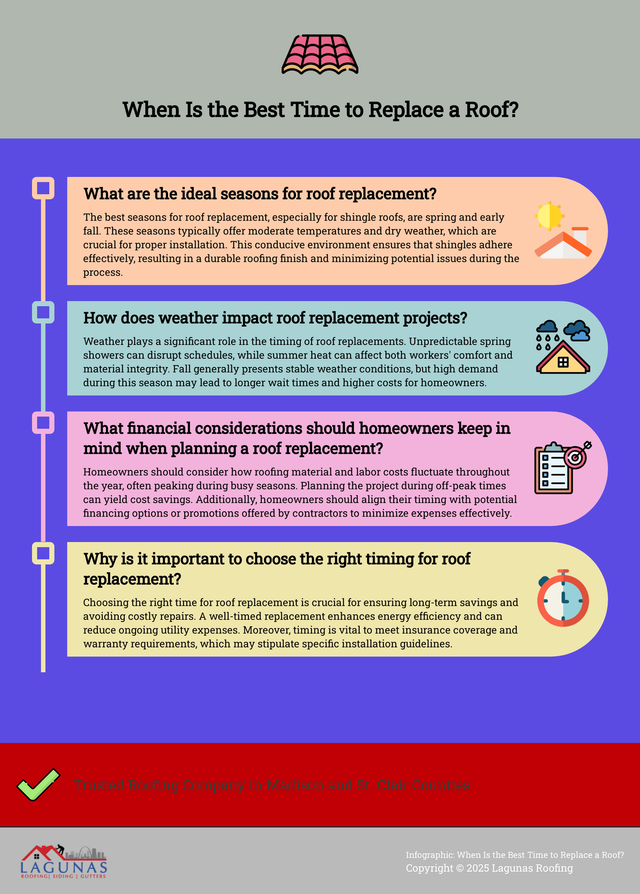
For homeowners focusing on shingle roofs, the ideal conditions for replacement include moderate temperatures and dry weather. Spring and early fall often offer these conditions, providing a suitable environment for shingle installation which makes them the best seasons for it.
Metal roofing can be installed in various weather conditions, but moderate temperatures still provide the best working conditions for installers.
Roofing materials and labor costs can fluctuate throughout the year, often peaking during high-demand seasons when contractors are busier. Planning your roof replacement during off-peak times can potentially save on costs.
| Season | Cost Level | Availability | Weather Risk |
|---|---|---|---|
| Spring | Moderate | Good | Low-Moderate |
| Summer | High | Limited | Low |
| Fall | High | Limited | Low |
| Winter | Low | Excellent | High |
Replacing your roof at the right time can lead to significant long-term savings. A well-timed replacement prevents expensive repairs and enhances energy efficiency, which may reduce ongoing utility expenses over time.
Think about how the timing of your roof replacement aligns with insurance coverage and warranty requirements. Some policies and warranties have specific guidelines regarding installation timing, making sure you meet the necessary criteria for coverage. Understanding average roof repair costs can help you decide between repair and replacement.
Experts, including the National Roofing Contractors Association (NRCA), recommend replacing your roof during moderate weather conditions for the best results. Professional roofing contractors often advise scheduling your roof replacement in spring or fall to avoid weather-related issues.
For more information about different roofing materials and their installation requirements, you can learn about roof shingles and their properties to better understand why timing matters for each material type.
Sometimes urgent replacement is necessary regardless of timing. Learn to identify common roofing issues that require immediate attention, such as:
If you’re considering a roof replacement, it’s important to plan ahead. For personalized advice, contact Lagunas Roofing and get tailored recommendations based on your specific needs. Our team serves the St. Louis metropolitan area and specializes in both residential and commercial roof repair services.
Feel free to call (618) 300-5661 or fill out an online form on our website for your free consultation.